Pesticide residue testing screens botanical and supplement ingredients for agricultural chemicals that can persist in raw materials and finished products. Advanced Laboratories runs a full USP <561> screen across 3 instruments and 4 validated methods, not a single-method shortcut, giving supplement and food manufacturers defensible, accredited results that hold up to scrutiny.
accredited results that hold up to scrutiny.
Test for Pesticides Across the Full USP <561> List
You can’t manage a contaminant you didn’t test for. Many labs screen only a subset of pesticides; we test the complete USP <561> target analyte list, so you get more confidence, deeper insight, and better risk management across your formulations and supply chain.

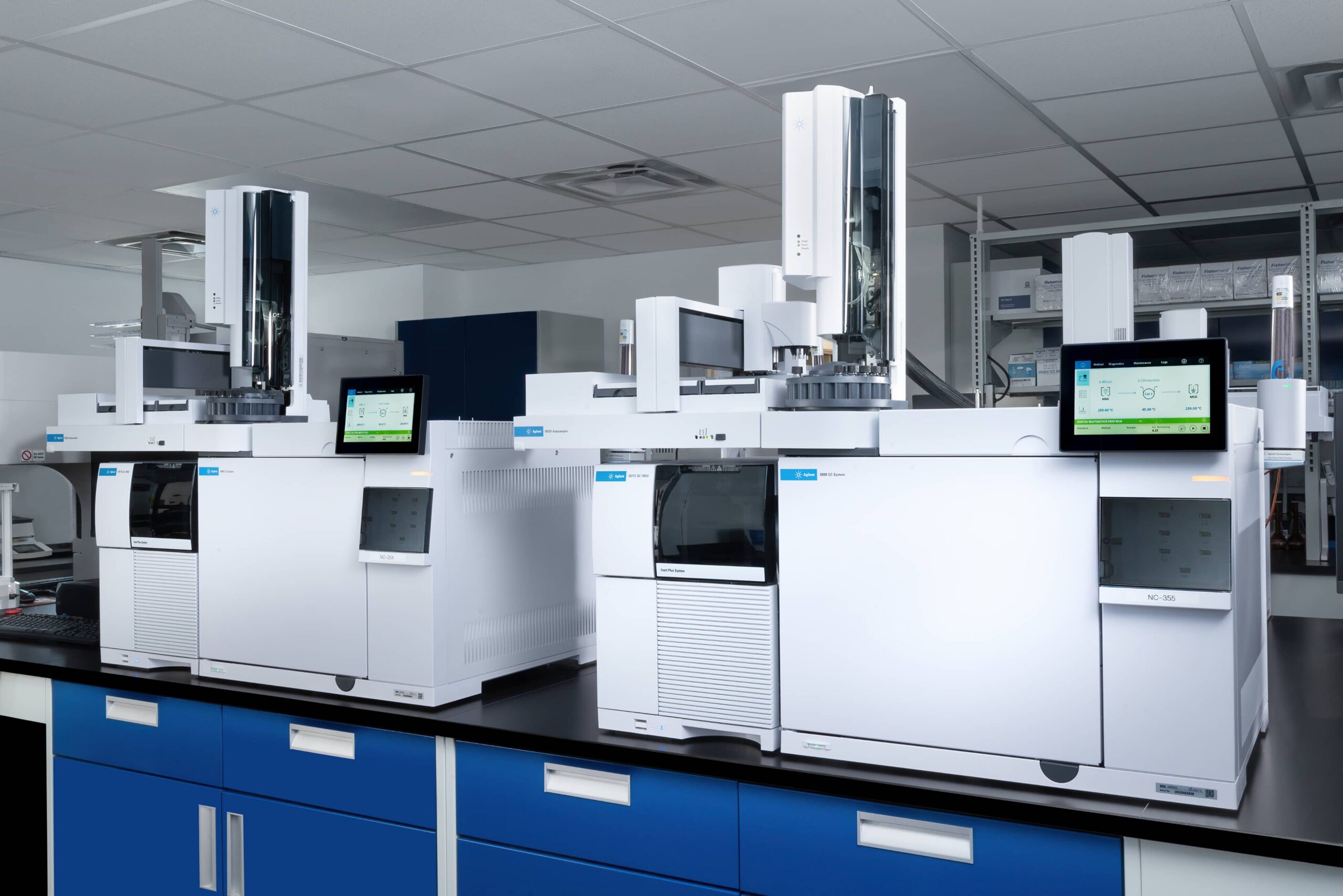
Pesticide Analysis Across 3 Instruments
GC-MS/MS
Gas Chromatography–Tandem Mass Spectrometry (GC-MS/MS) handles thermally stable, volatile, and semi-volatile compounds, with low detection limits for organochlorines like DDT and chlordane and high specificity in complex botanical matrices.
- Lower detection limits for volatile compounds
- High specificity in complex botanical matrices
- Strong quantitative performance
UPLC-MS/MS
Ultra-Performance Liquid Chromatography–Tandem Mass Spectrometry (UPLC-MS/MS) targets polar and thermally labile compounds that degrade under heat or resist volatilization, including many organophosphates and carbamates.
- Enhanced sensitivity at trace levels
- Reduced matrix interference
- Selective ion monitoring for confident identification
GC-MS
Some USP <561> analytes need dedicated workflows. Gas Chromatography–Mass Spectrometry (GC-MS) runs inorganic bromide and dithiocarbamates (measured as CS₂) under separate, chemistry-specific conditions.
- Optimized chemistry-specific detection
- Independent preparation workflows
- Improved accuracy without compromising other analyses
Why Our Pesticide Testing Laboratory Goes Further
Most labs run a single instrument and call it pesticide testing. We go further, so you get a defensible read on the full USP <561> list, not a partial picture.
See how each method targets a different pesticide group on our pesticide blog.
Common Pesticide Questions
What products can you test for pesticides?
We test food, powders, capsules, tablets, and liquids.
How much sample do you need?
About 20 grams is the optimal sample amount for pesticide testing.
Why does pesticide testing matter?
Pesticide residue testing screens botanical and supplement ingredients for agricultural chemicals that can persist in raw materials and finished products. Rather than the single-method shortcut many labs settle for, Advanced Laboratories runs a full USP <561> screen across 3 instruments and 4 validated methods, giving supplement and food manufacturers defensible, accredited results that hold up to scrutiny.