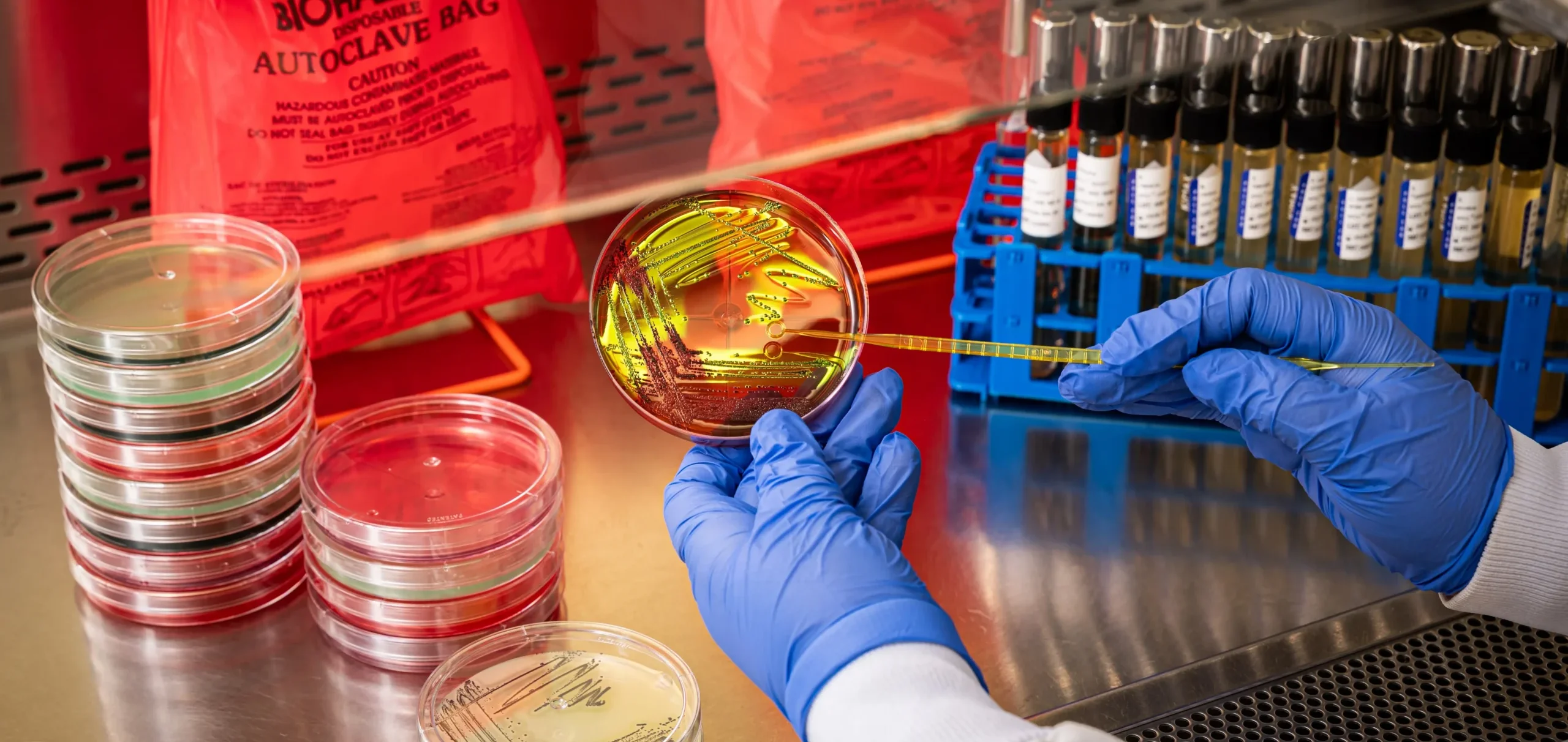
Microbiological testing screens dietary supplements, food, and personal care products for microorganisms such as bacteria, yeast, mold, and pathogens.
Advanced Laboratories runs compendial USP, FDA BAM, and AOAC methods with a 5-day turnaround, plus USP <51> preservative efficacy testing, in-house pathogen identification, and automatic retesting of out-of-spec results.
01 Compendial Microbiological Analysis
We run routine microbial testing using recognized compendial and regulatory methods, including USP, FDA BAM (Bacteriological Analytical Manual), and AOAC methods. Our microbiologists follow established incubation conditions, media preparation, and organism-confirmation practices aligned with current regulatory expectations and internal quality controls.
02 USP Preservative Effectiveness Testing
Preservative systems protect product stability and consumer safety. For cosmetics and other preserved products, we perform preservative efficacy testing, also called challenge testing, to USP <51> requirements. The study measures how well your preservative system controls microbial growth across the required intervals, and reports organism recovery, neutralization suitability, and log reductions against compendial criteria.
03 Probiotic Enumeration Testing
We enumerate probiotic strains using established methods, including Danisco protocols, APHA methods, and organism-specific plating and incubation. Our team supports probiotic manufacturers across a range of strains and finished products while maintaining strict culture handling and management. Probiotic counts start at $77 per strain.
Pathogen Identification Beyond the Plate
Know your microbe, know your risk. When you are investigating an out-of-spec result, environmental contamination, or a suspected pathogen, identification tells you what is behind the colony so you can act with confidence.
For routine bacterial and yeast identification, we use the VITEK 2 Compact platform to identify organisms quickly through biochemical characterization. When an organism needs more than biochemical identification, we coordinate DNA sequencing through qualified partner labs.
- Difficult-to-speciate isolates
- Confirmation of unusual organisms
- Mold identification
- Probiotic organisms
01 Microbial Quality Control You Can Trust
Microbiology depends on tight environmental control and procedural oversight. If a microbiological result comes back out of spec, we automatically run confirmatory re-testing to rule out lab contamination or handling variability before we report. That verification step is part of how we protect data integrity and give you results you can stand behind.
- Trusted USP, FDA BAM, and AOAC methods
- 5-business-day standard turnaround
- Experienced microbiologists and quality-focused lab practices
- USP <51> challenge testing for cosmetics and preserved products
- In-house VITEK microbial identification
- DNA sequencing coordination for advanced characterization
- Automatic OOS confirmation testing
- Transparent communication and dependable service

Microbiology Testing FAQ
What is microbiological testing?
Microbiological testing evaluates a product for microorganisms such as total aerobic bacteria, yeast and mold, coliforms, E. coli, Salmonella, Staphylococcus aureus, and Pseudomonas aeruginosa. The results help confirm product safety and support your quality program.
Why is microbiological testing important?
Microbial contamination can affect product safety, shelf life, and how a product meets regulatory expectations. Testing helps you identify contamination risks before a product reaches consumers.
What methods does Advanced Laboratories use for microbiology testing?
We use compendial and validated methods, including USP, AOAC, FDA BAM, and PCPC methods, selected to match your product type and the organisms in question.
Does Advanced Laboratories retest out-of-spec microbiology results?
Yes. Microbiological out-of-spec results are automatically investigated and re-run to help rule out lab-related contamination, at no extra cost to you.